
The TDSAT scrapping the Trai's judgement on channel pricing is a major victory for broadcasters, but could also see consumer prices moving up.

The trio has been voicing their criticism of Trai's recommendations and have asked the government to dump the report, which according to them are 'retrograde' and 'absurd'.
The Department of Telecommunications is set to issue guidelines for telemarketers in order to check unsolicited commercial calls.

Telecom operators added 13.35 million mobile subscribers in May 2011, taking the total number of telephone users in the country to 874.68 million, sectoral regulator Trai said.
In a bid to promote competition in resale of bandwidth, the Telecom Regulatory Authority of India in its recommendations submitted to Department of Telecom has favoured not fixing any ceiling on the number of players in the segment.
Telecom Regulatory Authority of India on Friday announced setting up of a Telecom Consumers Education and Protection Fund to educate and inform the consumers.
The rift between state-owned telecom services provider Bharat Sanchar Nigam Ltd and the telecom watchdog Telecom Regulatory Authority of India over reducing access deficit charge is likely to benefit consumers.

The Department of Telecommunications (DoT) has asked the Telecom Regulatory Authority of India (Trai) to indicate the formula used in international markets to fix the ratio between the reserve and the discovered prices of 2G telecom spectrum. Trai has assumed that the base price should be 80 per cent of that of the auction discovered price which is much higher than the internatioanl norm of 50 per cent.
The government on Monday appointed S R Rao as commerce secretary, in place of Rahul Khullar, who was made chairman of the Telecom Regulatory Authority of India after he retired earlier this month.

The Telecom Commission (TC) on Saturday put the onus of deciding the contentious issue of the base price for auction of 1,800 MHz of 2G band spectrum on the Empowered Group of Ministers (EGoM) headed by Finance Minister Pranab Mukherjee.
The Trai's move comes in the wake of sector tribunal Telecom Disputes Settlement and Appellate Tribunal rejecting last month a plea by some private mobile firms.
State-run BSNL on Saturday approached telecom tribunal TDSAT against sector regulator TRAI's decision to cut a levy paid by private operators to the public sector company for its rural operations.
Telecom Regulatory Authority of India on Wednesday issued another directive to Bharti, Spice and Hutchison-Essar following blocking of calls originating from the basic telecom players offering limited mobile services.
The draft report of the Public Accounts Committee (PAC) of Parliament is understood to have asked the UPA government to quantify the loss to the exchequer from the 2G scam and recover it from companies that benefited from this.
The Telecom Regulatory Authority of India on Monday proposed setting up of a 'National-Do-Not-Call Registry' to save millions of phone users from unsolicited calls from telemarketing executives.

Besides Sunil Mittal (Bharti Airtel) and Anil Ambani (Reliance Communications), Sarma has written to Sanjeev Aga of Idea, Anil Sardana of TTSL, Marten Pieters of Vodafone, Kuldip Singh of Mahanagar Telephone Nigam Limited and Kuldeep Goyal of Bharat Sanchar Nigam Limited.

The fourth generation or 4G technology offers download at faster speed known as ultra-broadband and high definition video on demand among other such services.

The Telecom Regulatory Authority of India (Trai) on Monday proposed a high reserve price for telecom spectrum to be auctioned, at nearly Rs 3,622 crore (Rs 36.22 billion) per MHz in the 1,800-MHz band (for GSM services).

Telecom subscriber base crossed the 95-crore mark in August, after a gap of more than two years, on the back of higher mobile users whose number touched 92.43 crore.
Interconnect user charges are paid by one telecom service provider to another for enabling calls from one network to the other. The present interconnect charge of 30 paise per incoming minute was fixed in 2003. The price was considered high even then. Now, with equipment prices falling, a revision was called for, said industry analysts.

At present 100% FDI is allowed, of which up to 49% investment in a company can be done through the automatic route
Releasing its recommendations for BWA spectrum allocation on Friday, Trai has suggested that the auction should be done in blocks of 5 MHz each and any bidder can bid for one or two or three blocks. A company can bid up to a maximum to 15 Mhz in block of 5 Mhz. The bidder has to specify before the auction, the number of blocks he desires to bid for.
Value-added services (VAS) and mobile-content providers may soon come under a licensing regime. Security concerns regarding VAS have come to the forefront in the ongoing debate over security issues surrounding Blackberry services in India.
In stark contrast with the Telecom Regulatory Authority of India (Trai) recommendation that only Unified Access Service Licence (UASL) licence-holders should participate in 3G auctions, Communications Minister A Raja today suggested that foreign telecom companies, too, would be permitted to bid for 3G spectrum.
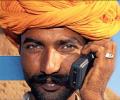
The country added a whopping 52.21 million mobile users during the quarter ended September 30, 2010, taking the wireless subscriber base to 687.71 million.
"As the existing licensees have already made huge investments in the infrastructure and their systems are in place, therefore, they will be in a better position to deliver 3G services efficiently at low incremental cost," Trai said in its views on permitting new entity for 3G Services.
Communication and IT Minister Dayanidhi Maran on Tuesday showered words of praise on Pradip Baijal, chairman, Telecom Regulatory Authority of India saying he has done a great job, especially in reducing telecom tariffs.

Indian telecom operators may soon be asked to compulsorily give their customers the option of paying tariff based on usage per second instead of the current per minute pulse, sector regulator TRAI said.

The department of telecommunication has decided that the existing variable licence fee structure for telecom operators should be replaced with a uniform one. An departmental note suggests a uniform licence fee of 8.5 per cent for all types of services.
The new broadcasting regulator Trai on Wednesday said it will strive to end the monopoly of cable operators by creating an atmosphere for entry of more players while regulating industry tariffs in the interim.
Telecom Regulatory Authority of India on Tuesday directed the cellular and basic telecom operators to provide accessibility to Internet services for cellular subscribers.
Ask for file notings on dual spectrum, new licence issues.
The service provider has to ensure that outsourcing arrangement to an agency does not absolve them of their responsibility to fulfil their obligation to consumers and it should not affect the rights of consumers against service provider, Trai said. All companies should set up a formal code of conduct for outsourced agency and its employees or agents for collection of outstanding dues from customers.
Another priority is to prepare the country for the fourth generation (4G) technology. It will not only improve teledensity and improve data services, but also ensure that the country is prepared for all the future developments, says J S Sarma.
For national long distance calling, the government had proposed 'One-India' in a bid to create uniform call rate across the country and for this it had invited four telecom players.
Bharti Group chairman Sunil Mittal on Tuesday said the unified licensing regime proposed by the Telecom Regulatory Authority of India could not be pursued in its present form, as it was in contradiction of the TDSAT judgement.
